
The lender’s minimum credit score requirements are posted right on the website. 600+ for alternative lenders. 680+ for SBA loans. 720+ if you want the best rates at a traditional bank.
What those pages don’t tell you: there are two credit scores involved, and most women-owned businesses have only built one of them.
Personal credit they’ve lived with for years — tracked, protected, sometimes hard-won. Business credit? For the majority of women who come to a financing conversation without it, the response from most lenders is the same: automatic pass, or a worse rate, or a lower approval amount. The absence of a business credit file reads as a red flag even when your personal credit is clean.
This is the most important thing nobody tells first-time founders. And it’s entirely fixable — if you start before you need the money.
Here’s the playbook.
Why Your Personal Credit Score Isn’t Enough
When you walk into a loan application, lenders pull both. Your personal credit score is table stakes. Your business credit profile is the other half of the evaluation — and for most new or growing businesses, that second file is either thin, inaccurate, or doesn’t exist at all.
This matters because the two systems are completely separate. A FICO score of 740 built over fifteen years of responsible personal finance does not automatically transfer to your business. Your business entity — whether it’s an LLC, an S-corp, or a sole proprietorship that’s been formalized — has its own credit identity, its own data sources, and its own scoring models.
When lenders see a strong personal credit score next to a blank business credit file, many assume one of two things: the business is too new to have established credit (a risk flag), or the owner doesn’t understand credit management (also a risk flag). Neither is a fair read of reality, but lenders aren’t graders — they’re risk managers, and absence of data reads as risk. And if your personal credit carries damage from medical debt, divorce, or student loans, the picture gets worse — read how your FICO score follows you into business lending for the full breakdown.
For women specifically, this creates a compounding problem. The full funding gap data is documented: women-owned businesses are denied at higher rates and offered worse terms than men with comparable financial profiles. A thin or missing business credit file gives a biased underwriting process exactly the ambiguity it needs to justify a worse outcome. Removing that ambiguity is strategic. It’s not extra credit. It’s armor.
The fix isn’t complicated. It just requires starting twelve months before you think you’ll need it.
What Business Credit Actually Is (And How It Differs from Personal)
Business credit is a separate credit identity for your business entity — tracked by different bureaus, using different data sources, and scored using different models than consumer credit. Here’s what the ecosystem looks like.
Dun & Bradstreet — PAYDEX Score
The most widely referenced business credit score. PAYDEX runs from 0 to 100, with 80+ considered good by most lenders. What makes it unusual: PAYDEX is almost entirely payment-history-based. Specifically, it measures whether you pay your vendors early, on time, or late — and by how many days. Ninety days early yields a higher score than paying on the due date. This is not how personal credit works. The implication: you can actively build a strong PAYDEX score in a way you cannot engineer a FICO score.
Dun & Bradstreet assigns every business a D-U-N-S number — a unique 9-digit business identifier that anchors your business credit file with their bureau. If you don’t have one, you don’t have a PAYDEX score.
Experian Business — Intelliscore Plus
Experian Business runs a separate bureau from consumer Experian. Their score, Intelliscore Plus, ranges from 1–100 (higher is better) and draws on payment history, credit utilization, business age, and public records. Like PAYDEX, it requires a separate registration and an active file.
SBFE — Small Business Financial Exchange
The SBFE aggregates lending data from banks and financial institutions and feeds that data to bureaus including Equifax Business. If you’ve ever had a business loan or line of credit, there’s a good chance that account history lives at the SBFE. If you haven’t, it’s another blank file.
The bottom line: none of these systems know about your personal credit history. They know about your business — its registration, its vendor payment history, its banking relationships, its public filings. You have to build that record deliberately. It doesn’t build itself.
Step 1 — Register Your Business with the Credit Bureaus
Before you can have a business credit score, you need to exist in the business credit system. This does not happen automatically when you file your LLC or get your business license.
Get an EIN
An Employer Identification Number is the federal tax ID for your business — the business-equivalent of a Social Security Number. You need one to open a business bank account, hire employees, and file business taxes. If you don’t have one, get it first. It takes about 15 minutes through the IRS EIN application and is free.
Use your EIN — not your SSN — whenever you open business accounts, apply for vendor credit, or register for business credit services. This is what separates your business credit identity from your personal credit identity.
Get a D-U-N-S Number
Go to dnb.com and register for a D-U-N-S number. It’s free and takes a few days to a few weeks to process. This is the anchor for your D&B file and your PAYDEX score. Without it, you have no D&B credit record.
Provide accurate business information when you register: legal entity name, physical address (not a PO box if you can avoid it), EIN, number of employees, and SIC or NAICS code for your industry. Inconsistency across registrations and accounts — different names, address formats, or entity types — is one of the most common reasons business credit files get fragmented or fail to build properly.
Register with Experian Business
Create a business credit file with Experian Business at experian.com/business. The process mirrors D&B registration. Use consistent business information across both registrations.
Have a dedicated business bank account
This should already exist, but if it doesn’t, open one now using your EIN. Keeping personal and business finances separate is not just good accounting — it’s a prerequisite for building a business credit profile. Lenders and bureaus expect to see a business banking relationship. A business that runs through a personal checking account sends the wrong signal at every stage of underwriting.
Step 2 — Open Net-30 Vendor Accounts
This is where the actual credit-building begins.
Net-30 accounts are trade credit arrangements where you purchase supplies or services on account and pay within 30 days. When a vendor reports that payment history to business credit bureaus — and not all of them do, so this distinction matters — it becomes trade line data in your credit file. Trade lines are the primary raw material of a PAYDEX score.
The strategy: open accounts with vendors who report to D&B and Experian Business, make small regular purchases, and pay early. Repeat.
Vendors that report to business credit bureaus:
- Uline — packaging, shipping, and industrial supplies. Reports to D&B. Opens accounts on net-30 terms with no prior credit history required. Place small, legitimate supply orders and pay within 30 days.
- Grainger — industrial supplies and MRO (maintenance, repair, operations) products. Reports to D&B. Account setup is straightforward; you’ll likely need a few initial orders before they extend net-30 terms.
- Quill — office supplies (Staples subsidiary). Reports to D&B. Accessible for new businesses with minimal purchase history.
- Crown Office Supplies — specifically designed as a starter trade line for businesses building credit from scratch. Reports to D&B and Experian. Easy approval, low minimum orders.
- Wise Business Plans — business services vendor that reports to bureaus. Useful if you need planning or research services anyway.
The mechanics:
- Open accounts at 3–4 reporting vendors in the same month
- Make small but real purchases (products or services you actually need)
- Pay invoices 10–15 days before the due date — early payment boosts PAYDEX faster than on-time payment
- Repeat over 6–12 months to build a consistent trade line history
Three to five active trade lines reporting consistent early payment history is enough to establish a meaningful PAYDEX score within 6 months. That’s the target for the first phase of building.

A word of caution: some vendors advertise “net-30 accounts for business credit” but don’t actually report to major bureaus. Before opening an account for credit-building purposes, confirm they report to D&B, Experian Business, or Equifax Business. If they don’t report, the account is useful for purchasing but does nothing for your credit file.
Step 3 — Get a Business Credit Card That Reports
Business credit cards add a different type of trade line — revolving credit — which diversifies your credit profile and contributes to your Intelliscore Plus with Experian Business.
The critical distinction: most major business credit cards report your payment history to consumer credit bureaus, not business credit bureaus. That means they build your personal credit file, not your business credit file. For credit-building purposes, you need cards that explicitly report to business bureaus.
Cards that report to business credit bureaus:
- American Express Business Cards — report to Dun & Bradstreet. Amex is one of the few major issuers that consistently reports to business bureaus. Multiple card options available; the Blue Business Cash and Business Gold are commonly used.
- Capital One Spark Business Cards — report to business bureaus including Experian Business. Available at multiple credit tiers.
- Bank of America Business Credit Cards — report to business bureaus.
- Brex — designed specifically for startups and new businesses. Reports to Experian Business and Dun & Bradstreet. Approval based on business bank balance rather than personal credit, which makes it accessible for founders with thin personal credit or who want to keep personal and business credit completely separate.
For businesses with thin credit files:
If your business credit file is brand new, a secured business credit card is the most reliable entry point. You deposit a cash collateral amount, which becomes your credit limit. The secured structure makes approval accessible; the reporting function builds your business credit profile the same way an unsecured card does.
Keep utilization below 30% of your card limit at all times. High utilization — even if you pay in full monthly — is a negative signal in business credit scoring models, just as it is in personal credit. If your limit is $2,000, don’t carry more than $600 at any reporting period. If you’re already relying on cards as your primary capital source, read about what happens when credit cards become your primary capital — the transition plan is different from the credit-building playbook.
Step 4 — Pay Everything Early
This step sounds obvious. It is not practiced nearly enough.
PAYDEX is structured around payment timing, not just payment completion. The scoring works like this:
| Payment Timing | PAYDEX Score |
|---|---|
| Pay 30+ days early | 100 |
| Pay 20 days early | 90 |
| Pay on the due date | 80 |
| Pay 15 days late | 70 |
| Pay 30 days late | 60 |
Eighty is the threshold most lenders cite as a minimum for a business credit applicant. But 80 means paying on the exact due date — which offers zero margin for any error, delay, or processing lag. Build the habit of paying vendor invoices 15–20 days before they’re due. It takes the same action with meaningfully better output.
Payment history accounts for approximately 90% of a PAYDEX score. Everything else — number of trade lines, account age, credit utilization — is secondary. The most direct investment you can make in your business credit profile is paying early, consistently, across every reporting account you’ve opened.
Set calendar reminders or automate payments wherever accounts allow it. Do not rely on remembering. Early payment should be systematic.
Step 5 — Monitor and Dispute
Business credit files contain errors. More often than you’d expect.
Studies have found that a significant percentage of business credit files contain inaccurate information — wrong ownership records, misattributed accounts, outdated addresses, and in some cases accounts that don’t belong to the business at all. These errors affect your score and your approval odds just as much as legitimate negative history.
How to monitor your business credit:
- D&B: Nav provides free access to your D&B PAYDEX score and business credit summary. D&B also offers direct monitoring through their CreditSignal product.
- Experian Business: Monitor through Nav or directly through Experian Business. Nav aggregates multiple bureau scores in one dashboard, which is more efficient than managing bureau access separately.
- Equifax Business: Also accessible through Nav.
Check your business credit files monthly for the first year of building. You’re looking for: trade lines that haven’t appeared (vendors you’ve been paying that haven’t reported), accounts with wrong payment status, errors in your business information, and any accounts you don’t recognize.
The dispute process:
Business credit disputes are handled directly with the bureaus — not through the CFPB dispute process that covers consumer credit. Contact D&B or Experian Business directly via their online dispute portals. Provide documentation: vendor invoices, payment receipts, bank statements confirming payment dates. Unlike consumer credit disputes, business credit bureaus are not legally required to respond within a specific timeframe — follow up if you don’t hear back within 30 days.
The 6-Month vs 12-Month Credit Profile
Timelines matter. Here’s what’s realistic.
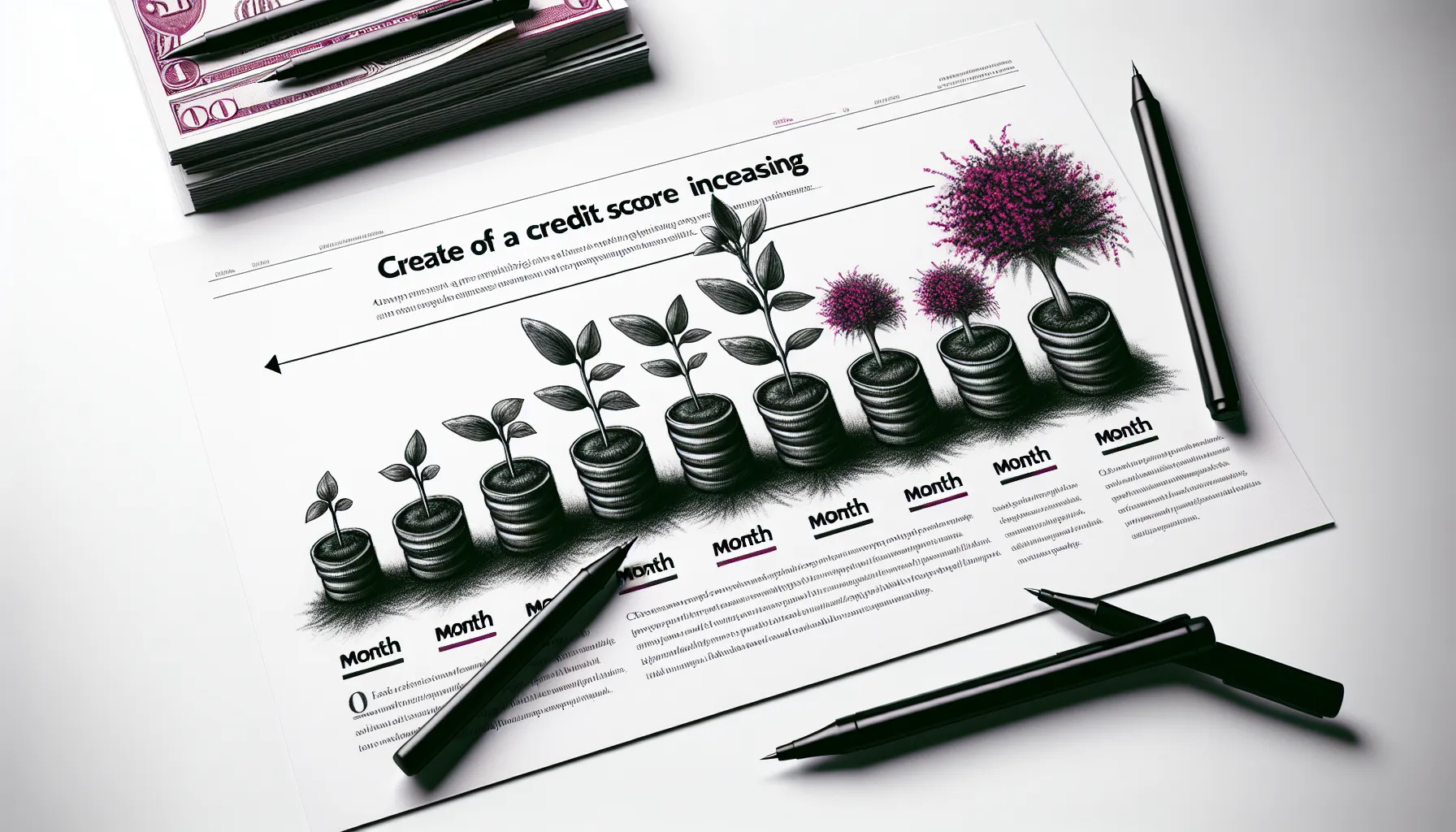
At 6 months, a well-executed strategy produces:
- A D-U-N-S number and active D&B file
- 3–5 reporting vendor trade lines with early payment history
- A PAYDEX score in the 75–85 range (achievable with consistent early payment)
- An Experian Business Intelliscore starting to populate
- A business credit card with 6 months of clean payment history
This profile qualifies for most alternative lender products and some CDFI loan programs. It will not yet satisfy SBA underwriting requirements at most banks, and it won’t move the needle much on conventional bank applications — those require more depth.
At 12 months, with continued execution:
- PAYDEX score of 80–90+ (if early payment has been consistent)
- 5–8 trade lines across different vendor categories
- Business credit card account with a year of history and lower utilization ratio
- Intelliscore Plus in the good range (76+)
- Business banking history long enough to satisfy most lender requirements
- A credit profile that complements a strong personal credit score for SBA loan consideration
Twelve months of consistent, deliberate credit-building is the threshold at which most lenders will see a business credit file as meaningful rather than incidental. That’s when the business credit profile starts actively working in your favor rather than simply not working against you.
When your profile is “loan-ready”:
A practical benchmark: PAYDEX of 80+, Intelliscore of 76+, at least 4 active trade lines, and a business credit card with 12 months of history. At that point, you have a business credit file that a lender can evaluate rather than a gap they have to explain away. Pair that with strong personal credit (680+ for SBA, 600+ for alternative lenders) and you’ve addressed both files the underwriter will pull.
If you’re already post-denial and building credit to reapply, read what to do after a denial for the full reapplication strategy alongside the credit-building work.
Why This Matters More for Women
This isn’t a neutral piece of financial advice. The context matters.
Documented research shows that women-owned businesses face systematic bias in lending — higher denial rates, lower approval amounts, and worse loan terms than men with comparable financials. A study by the Federal Reserve found that women need credit scores approximately 40 points higher than men to achieve equivalent loan approval rates. That’s not a gap in creditworthiness. That’s a gap in how the same creditworthiness is evaluated.
What that means in practice: as a woman applying for business financing, the margin for error in your credit profile is narrower than it is for a man with the same business. Lenders who apply additional scrutiny to women-owned businesses are looking for reasons to say no. A thin or absent business credit file is an easy reason. Remove it. And if you’re planning a family, understand how protecting your credit during maternity leave fits into this picture.
A strong business credit file doesn’t eliminate bias. But it closes the gaps that a biased review process can exploit. It answers the questions before they’re asked. It moves your application from “ambiguous” to “clearly qualified” — and qualified applications are harder to deny without documentation that will hold up to scrutiny.
For the broader context on why this is the landscape women operate in, read the full funding gap data. The numbers are important to understand because they explain why building a strong credit profile is not optional — it’s a strategic response to a documented reality.
You can also explore CDFI lenders as part of your financing strategy — the CDFI guide for women covers lenders who use relationship-based underwriting that goes beyond credit scores. CDFIs are not a credit score workaround; they’re a complementary path. Use both.
The Action List
This is the sequence, compressed:
Month 1:
- Get your EIN (if you don’t have one)
- Register for a D-U-N-S number at dnb.com
- Register with Experian Business
- Open a dedicated business bank account (if you don’t have one)
- Open accounts at 3 reporting vendors: Crown Office Supplies, Quill, and one more from the list above
Month 2–3:
- Make small purchases from each vendor account
- Pay all invoices 15–20 days early
- Apply for a business credit card that reports to business bureaus
- Set up business credit monitoring through Nav
Month 4–6:
- Continue purchasing and early payment across all trade line accounts
- Check your D&B and Experian Business files monthly
- Dispute any errors immediately with documentation
- Keep business credit card utilization below 30%
Month 7–12:
- Add 1–2 additional vendor trade lines as your profile matures
- Monitor PAYDEX and Intelliscore monthly
- Begin reviewing lending options through The Funding Playbook with a profile that can now support a real application conversation
Resources
- Dun & Bradstreet — D-U-N-S number registration and PAYDEX monitoring
- Experian Business — Business credit file registration and monitoring
- Nav — Free aggregated business credit score monitoring
- IRS EIN Registration via SBA — Federal Employer Identification Number
- Annual Credit Report — Free personal credit check (keep personal and business in sync)